 Türkçe
 العربية
 Español
 Français
 русский
 Deutsch


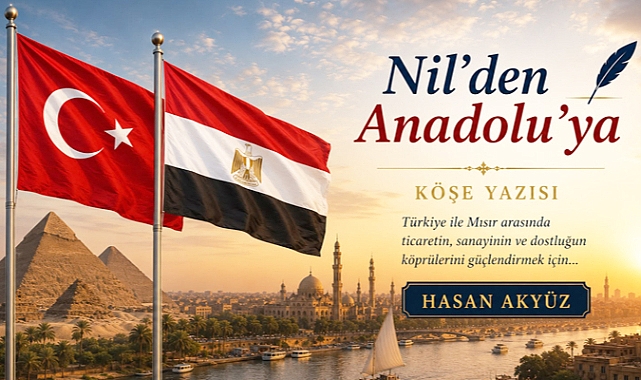
For many people looking at Egypt from the outside, they still see the "old Egypt." However, those who live, produce, and work with investors within the country are witnessing a completely different picture. Egypt is undergoing a quiet yet determined economic transformation.
With a population of approximately 120 million, Egypt is not only a massive consumer market but is also rapidly advancing toward becoming a production hub. The state’s investments in industrial zones, new ports, highways, logistics centers, and energy projects provide significant advantages to producers. Today, many international companies are evaluating Egypt as a strategic manufacturing hub to reach markets in Europe, Africa, and the Middle East.
The agricultural sector is another vital pillar of this change. Thanks to modern irrigation systems, greenhouse investments, and an export-oriented production model, Egypt has become one of the world's major suppliers of frozen fruits and vegetables, citrus, potatoes, onions, and many other agricultural products. Agriculture is no longer seen merely as a sector to feed the domestic market, but as a strategic area that generates foreign currency.
Of course, Egypt still faces challenges. Inflation, foreign exchange balance, access to finance, and bureaucracy can sometimes be difficult for investors. Despite this, production continues, new factories are opening, and exports are gaining more importance every year.
Today, Egypt’s greatest advantages are its young population, competitive labor costs, strategic location at the intersection of three continents, and extensive free trade agreements. When these advantages are combined with the right policies, they can turn the country into a significant production center not only regionally but on a global scale.
The factor that will determine Egypt's success in the next five to ten years is not just large-scale projects, but rather the increase in value-added production, investment in technology, and the sustainability of its export-oriented growth.
Egypt's future is not only shaped by the pyramids; it is being defined by its factories, farmlands, ports, and export-driven businesses. Those watching this change from afar may not fully notice it yet. However, those working on the ground know that Egypt is moving toward a new economic era with slow but steady steps.