 Türkçe
 العربية
 Español
 Français
 русский
 Deutsch


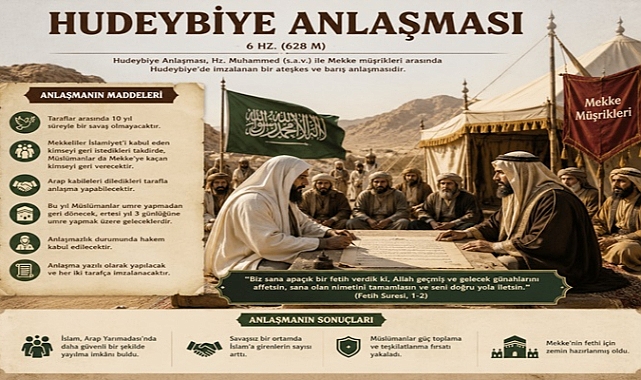
One of the most critical turning points in Islamic history is, without a doubt, the Treaty of Hudaybiyyah, signed in the sixth year of the Hijrah. This event was not merely the signing of a diplomatic text; it was a profound stage of trial where the limits of the Muslims' loyalty, patience, and submission were tested under conditions heavy enough to "shatter even rocks." This historical event, which demonstrates what it truly means to endure hardships and tolerate persecution for the sake of faith, is the most concrete manifestation of how seeming defeats can transform into grand victories.
The Seeming Defeat and Shaken Hearts
The Prophet Muhammad (pbuh) and his companions had set out toward Mecca with a purely peaceful intention: to perform the Umrah pilgrimage. However, the arrogant and uncompromising stance of the Meccan polytheists forced the Islamic army to halt at Hudaybiyyah. The companions, renowned for their bravery and always ready to risk their lives on the battlefield, were deeply astonished by the major concessions the Messenger of Allah granted to the disbelievers for the sake of peace and the greater good of Islam.
The terms of the treaty, at first glance, appeared entirely detrimental to the Muslims. The hearts of many companions, particularly Umar ibn al-Khattab (r.a.), who could not tolerate injustice, grew heavy with grief. Yet, in the face of this bleak picture that defied their human reasoning, they bowed their heads in absolute obedience to the unique guidance and command of the Prophet. This was the first and greatest collective test of "submission"—the very essence of Islam.
The Cry of the Chains: The Incident of Abu Jandal (r.a.)
Before the ink of the treaty could even dry, the first trial emerged to burn the hearts of the Muslims like a glowing ember. Abu Jandal (r.a.), who had been shackled and subjected to severe torture in Mecca for accepting Islam, found a way to escape his chains. Hurting and stumbling, he sought refuge in the Islamic army at Hudaybiyyah. However, the harshest clause of the treaty dictated that anyone escaping from Mecca to join the Muslims must be returned.
His own father, Suhayl, acting as the representative of the polytheists, showed no mercy upon seeing his son covered in blood; he struck him and insisted on taking him back. Despite all the pleas of the Prophet (pbuh) and his requests to exempt Abu Jandal from the treaty, the polytheists refused to back down. Amidst Abu Jandal’s heartbreaking cries—"O Muslims! I have sought refuge with you, will you hand me back to these tyrants who want to turn me away from my religion?"—the Muslims were forced to send him back with profound agony in their hearts. That was the moment the entire Islamic army burst into tears. The Messenger of Allah, with a sorrowful yet dignified voice, counseled him to be patient, prophesying that Allah would soon create a way out for him.
The Flower of Salvation Blooming by the Sea: Abu Basir (r.a.)
The divine plan continued to operate far beyond human comprehension. Following the treaty, Abu Basir (r.a.), who had fled to Medina, was also handed over to two Meccan guards to be sent back in accordance with the rules. However, Abu Basir possessed a noble soul that refused to accept humiliation. During the journey, through a clever maneuver, he neutralized one of the guards and returned to Medina. He said to the Messenger of Allah, "O Messenger of Allah, you fulfilled your word and handed me over. But I have no personal treaty with them." To avoid putting Medina in a difficult position, he left the city and settled in a coastal region called "Is" by the Red Sea.
This move was like an echo of a silent cry. Other Muslims suffering under oppression and torture in Mecca—including Abu Jandal, who managed to escape his dungeon—fled in waves to join Abu Basir. In the middle of the desert, in a harsh and deprived geography devoid of any human means, this devoted community, having no refuge but their faith, effectively rose from the ashes and established a powerful resistance front.
Divine Justice and the Helplessness of the Polytheists
These faithful guardians, trying to survive on their own, began to intercept the Meccan trade caravans heading to Damascus in order to survive and put an end to the tyranny. The economy of Mecca was paralyzed, leaving the disbelievers desperate and ruined.
The Meccan aristocracy, who had once arrogantly crushed the Muslims, sent an envoy to the Prophet Muhammad (pbuh), practically begging on their knees. They requested the abolition of the very clause they had stubbornly insisted upon—"those who flee Mecca will be returned"—and begged for those mujahideen on the coast to be accepted into Medina immediately.
The Victory of Patience and the Blessed End
That patience at Hudaybiyyah, which initially looked like a "disappointment and injustice," transformed into a great diplomatic and military victory through the hands of those who wore patience as armor and endured every persecution for their faith. The secret behind the Holy Qur'an defining this treaty as a "Manifest Victory" (Fath al-Mubin) was manifested through this unique struggle waged in the hot sands of the desert and by the seashore.
However, the conclusion of this blessed story ended with a portrait of loyalty breathing with sorrow. When the letter of invitation and salvation from Medina reached the camp on the coast, the architect of this glorious resistance, Abu Basir (r.a.), was gravely ill. As his eyes were closing to this world, he pressed the Prophet’s letter to his chest and returned his soul to his Creator while holding that sacred document.
The lives of figures like Abu Basir and Abu Jandal remain etched in the pages of history as an eternal monument of faith, of refusing to bow down in the face of hardships, of patience, and above all, of absolute loyalty to Allah and His Messenger at any cost.