 Türkçe
 العربية
 Español
 Français
 русский
 Deutsch


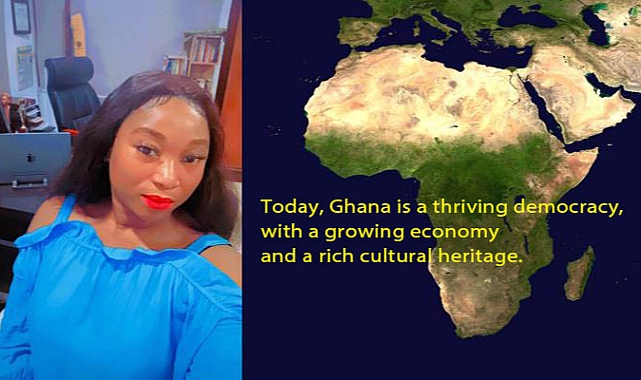
As a proud Ghanaian with a background in Human Resource Management and a passion for the pharmaceutical industry, I've always been fascinated by the rich history of my homeland. With a Bachelor's degree in Human Resource Management and a Diploma in Pharmacy, I've developed a unique perspective on the country's development and growth. In this article, I'll take you on a journey through the history of Ghana, highlighting the key events, figures, and cultural practices that have shaped our nation into what it is today.
*Ancient Ghana: The Empire that Shaped the Region*
The history of Ghana dates back to the 3rd century AD, when the ancient Ghana Empire was a powerful and influential force in West Africa. Located in what is now modern-day Mali and Mauritania, the empire was a major trading hub, with merchants coming from all over the region to exchange goods such as gold, salt, and kola nuts. The Ghana Empire was known for its strong leadership, rich culture, and sophisticated system of government, which allowed it to thrive for centuries.
*The Impact of European Colonization*
Fast forward to the 15th century, when European traders and colonizers began to arrive on Ghana's shores. The Portuguese were the first to establish trade relations with the Ghanaian kingdoms, followed by the Dutch, British, and other European powers. The colonization of Ghana had a profound impact on the country, with the British eventually establishing control over the region in the late 19th century. During this period, Ghana's economy was transformed, with the introduction of new crops, industries, and infrastructure.
*The Struggle for Independence*
As the 20th century dawned, Ghanaians began to agitate for independence from British colonial rule. Led by figures such as Kwame Nkrumah, J.B. Danquah, and Edward Akufo-Addo, the struggle for independence gained momentum in the mid-20th century. On March 6, 1957, Ghana became the first country in sub-Saharan Africa to gain independence, with Kwame Nkrumah as its first prime minister.
*Nkrumah's Legacy*
Nkrumah's leadership was instrumental in shaping Ghana's early years as an independent nation. He implemented a range of policies aimed at modernizing the country's infrastructure, economy, and education system. However, his government was also criticized for its authoritarian tendencies, and he was eventually overthrown in a military coup in 1966.
*Modern Ghana: Challenges and Opportunities*
Today, Ghana is a thriving democracy, with a growing economy and a rich cultural heritage. The country has made significant strides in areas such as education, healthcare, and infrastructure development. However, challenges remain, including poverty, corruption, and inequality. As a nation, we must continue to work together to address these challenges and build a brighter future for all Ghanaians.
*Conclusion*
As I reflect on the history of Ghana, I am struck by the resilience and determination of our people. From the ancient Ghana Empire to modern-day Ghana, our nation has been shaped by a complex mix of cultural, economic, and political factors. As a Ghanaian with a background in Human Resource Management and pharmacy, I am proud to be part of a country that is committed to progress and development. I hope that this article has provided a glimpse into the rich history of Ghana, and I look forward to exploring more of our nation's fascinating story in future articles.
*About the Author*
Juliet Sanakey, a 34-year-old Ghanaian writer with a Bachelor's degree in Human Resource Management and a Diploma in Pharmacy. I am passionate about exploring the intersection of business, healthcare, and culture, and have written extensively on these topics. I am committed to promoting Ghana's rich cultural heritage and contributing to the country's development through my writing.