 Türkçe
 العربية
 Español
 Français
 русский
 Deutsch


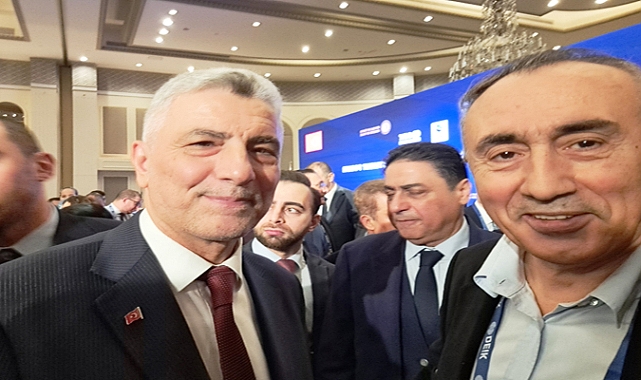
Relations between Türkiye and Morocco have long held the potential to grow beyond diplomatic courtesy and transform into a genuine economic partnership. Yet much of this potential still waits to be fully realized. That is precisely why the Türkiye–Morocco Business and Investment Forum held in Istanbul was not just another meeting—it was a critical turning point shaping the future of both countries.
The participation of more than 400 business leaders, alongside ministers, investment agencies, and major economic institutions, clearly shows that the two nations are ready to move from “commercial intent” to “strategic cooperation.”
18 Years of Progress: Time to Accelerate
The figures shared by Türkiye’s Minister of Trade Ömer Bolat summarize the entire picture:
It has been 18 years since the Free Trade Agreement between Türkiye and Morocco came into effect, during which Moroccan exports to Türkiye increased ninefold, while Türkiye’s exports to Morocco grew eightfold. Today, bilateral trade volume stands at around 5 billion dollars.
But the story isn’t just about numbers…
Bolat’s emphasis—“Trade accelerates when investments increase”—hits the mark. Currently, around 200 Turkish investors operate in Morocco, generating an economic footprint of nearly 1 billion dollars. This is both promising and insufficient.
Considering Morocco’s role as a gateway to West Africa, the true potential goes far beyond the current figures.
Morocco’s World Cup Opportunity: An Open Invitation for Türkiye
Morocco’s co-hosting of the 2030 World Cup with Spain and Portugal presents a major economic opportunity for Türkiye.
The Turkish contracting sector has completed 100 billion dollars’ worth of projects across Africa and 4.2 billion dollars in Morocco alone. This experience will no doubt align with upcoming infrastructure demands—stadiums, hotels, roads, airports, and more—leading up to the World Cup.
Morocco’s Ambassador to Ankara, Mohammed Ali Lazreq, delivered an important message when he noted: “Türkiye invested only 300 million dollars in Morocco over the last decade; this does not reflect the country’s potential.”
It was a polite yet powerful call for Turkish investors to take Morocco more seriously.
A New Economic Axis Is Possible
DEİK President Nail Olpak made a significant point in saying:
“We do not see Morocco merely as a local market, but as a strategic gateway to Africa, Europe, and other regions.”
Indeed, Morocco’s economic agreements with the EU, the U.S., Africa, and the Arab world offer Türkiye enormous opportunities.
For Turkish companies, Morocco represents:
a logistical bridge to Africa,
a production hub for Europe,
a connection point to the Arab world,
and a long-term strategic partner.
Meanwhile, Türkiye offers Morocco:
industrial capacity,
strong contracting power,
technological manufacturing,
economies of scale,
and a dynamic entrepreneurial sector.
Together, these strengths point to a clear conclusion:
Türkiye and Morocco can establish a new economic axis.
From Supply Chains to Joint Production
As noted by Türkiye–Morocco Business Council Chair Zeynep Bodur Okyay, relations between the two countries must now move beyond simple trade.
Her call—“Let’s produce together, let’s develop technology together”—perfectly captures the future vision.
This collaboration can flourish especially in:
automotive,
textiles,
machinery,
logistics,
and modern agriculture.
CGEM President Chakib Alj further reinforced this perspective:
“If Türkiye’s scale and technology combine with Morocco’s flexibility and market access, we can build strong supply chains serving both Europe and Africa.”
This may sound like an aspiration, but it actually rests on solid strategic foundations.
Conclusion: This Is Only the Beginning
The most significant outcome of the Istanbul forum may well be the concrete commitments to follow—upcoming visits, new agreements, and joint ventures. Minister Bolat’s announcement—“We will visit Morocco in a month and a half with a large delegation”—shows that these efforts will not remain on paper.
Türkiye and Morocco are not far from each other—neither geographically nor culturally.
What has been missing is the strategic drive to unlock their shared potential.
This forum suggests that both nations are now more determined than ever.
Perhaps the economic story we’ve been waiting years to write is finally beginning now.






Thank you for your efforts!