 Türkçe
 العربية
 Español
 Français
 русский
 Deutsch


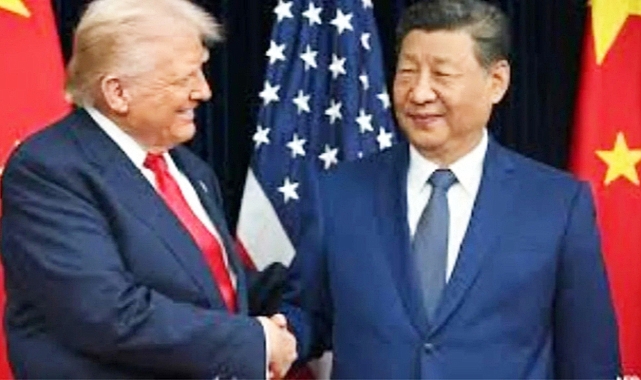
The recent meeting between U.S. President Donald Trump and Chinese President Xi Jinping in Busan, South Korea, marked more than a diplomatic exchange — it signaled a critical moment in the future of global trade and technology. The deal securing the flow of rare earth elements from China to the U.S. has immense strategic importance for Washington, as these materials underpin modern industries and defense systems.
Background: A Pause in a Prolonged Trade War
During their two-hour summit, Trump and Xi agreed on a one-year deal to ensure uninterrupted exports of rare earth minerals to the United States. Trump announced that, in recognition of progress on soy imports, rare earths, and fentanyl issues, overall tariffs on Chinese goods would be reduced from 57% to 47%.
While Trump hinted at the possibility of extending the agreement, China’s Ministry of Commerce emphasized that the deal would last only one year, serving as a temporary truce in the escalating tariff conflict.
Why Are Rare Earths So Crucial?
Rare earth elements — a group of 17 metals including scandium, yttrium, and the 15 lanthanides — are essential in producing everything from electric vehicle motors and radar systems to smartphones and missile guidance technologies.
Despite their name, these elements are not particularly rare in nature, but their extraction and refinement are complex and costly. China dominates this sector, accounting for about 60% of global mining and over 90% of refining and magnet manufacturing, giving Beijing unmatched leverage in global supply chains.
China’s Restrictions and U.S. Vulnerability
In April, following Washington’s tariff increases on Chinese exports, Beijing imposed restrictions on the export of seven rare earth minerals. These were expanded in October, requiring exporters to disclose intended uses and obtain special licenses.
The move exposed the United States’ dependence on Chinese refining capacity — a vulnerability that the Busan agreement aims to temporarily ease. However, U.S. officials acknowledge that reducing reliance on China will take years, even as new supply chains are being developed in Australia and Europe.
The Limits of the Deal
China’s Commerce Ministry announced a one-year suspension of its new October export controls, but did not address earlier restrictions imposed in April. U.S. Trade Representative Jamieson Greer confirmed that “proposed new controls” would not be implemented, implying that previous limits remain in place.
Thus, while the deal stabilizes markets, it doesn’t fully eliminate Washington’s strategic risk.
Global Impact: A Temporary Relief for Industry
Rare earths are vital to industries ranging from clean energy to defense. China’s earlier restrictions had already caused production slowdowns in India and Europe. For now, the Busan accord provides a temporary buffer against further disruptions — but experts warn that meaningful diversification of supply will take years.
Conclusion: A Strategic Truce Amid Ongoing Rivalry
The Trump–Xi rare earth agreement represents a short-term stabilization in a much broader contest for global technological dominance. While the U.S. seeks to secure its access to critical materials, China continues to use its resource advantage as a tool of geopolitical influence.
This balance — between dependency and dominance — will shape not only global trade but also the next generation of technological power.